← ArchiveXserve · 2009
Xserve (Early 2009)
The 2009 Xserve adopted Nehalem Xeon processors with integrated memory controllers, Hyper-Threading and Turbo Boost. Single-processor and dual-processor configurations shared the 1 U enclosure, with different DIMM-slot counts and memory capacity.
- First available
- April 7, 2009
- Discontinued
- January 31, 2011
Image: Apple Computer, Inc. · Original Apple product photography; rights reserved. ↗
History
An optional internal solid-state drive supplemented the three hot-plug disk bays without occupying one of them. GeForce GT 120 graphics provided Mini DisplayPort, while PCI Express expansion, dual Gigabit Ethernet and an optional redundant power supply supported server installations. This was the final Xserve hardware generation.
Media 4
View all ↗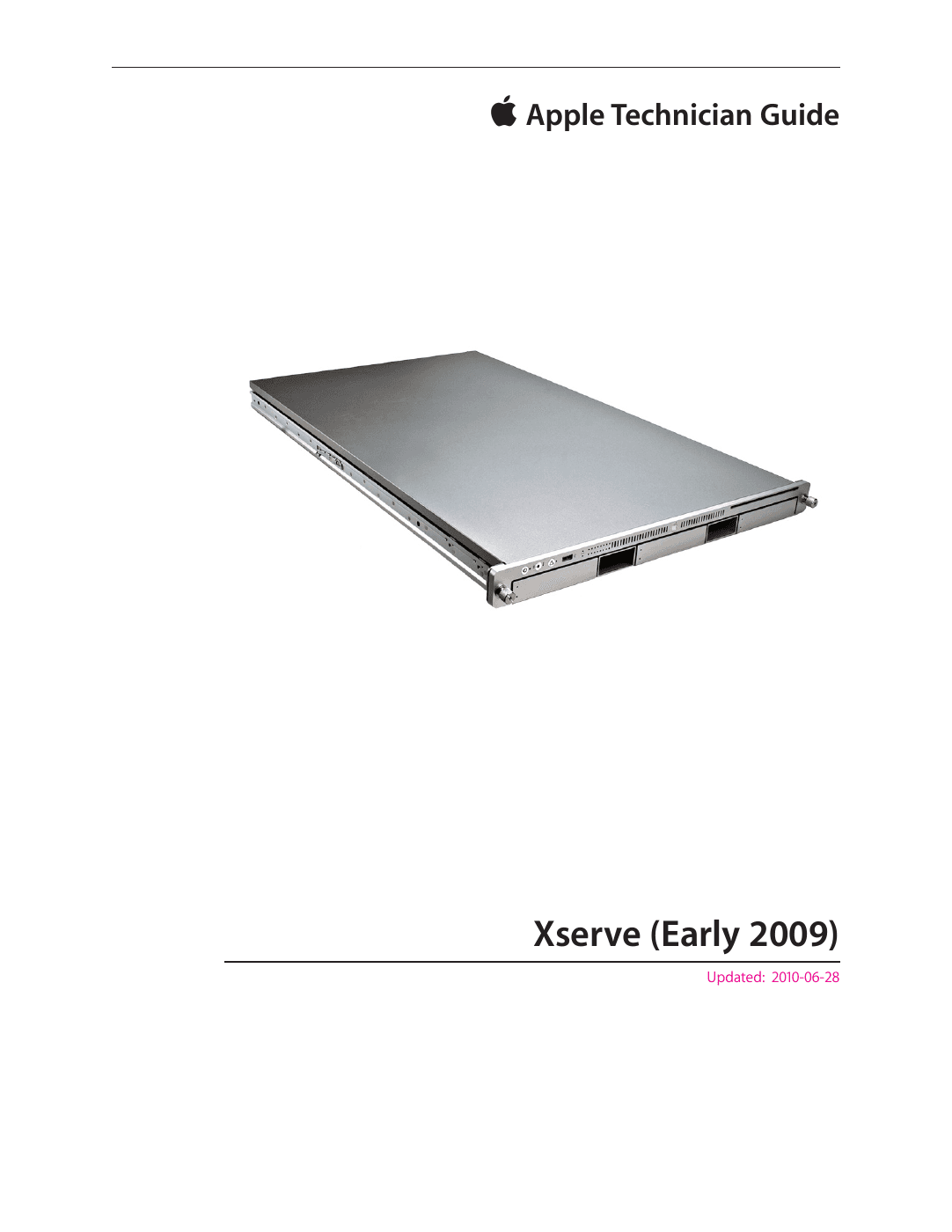
4 of 4 records
Details
Specifications
17 fields
- Processor
- One 2.26 GHz Quad-Core Intel Xeon 5500 series processor / Dual 2.26 GHz, 2.66 GHz, or 2.93 GHz processors ↗
- Memory
- 3 GB DDR3-1066 ECC standard; six DIMM slots with one processor, twelve with two; Apple’s configuration table offers up to 24 GB or 48 GB respectively ↗
- Storage
- 160 GB 7200-rpm SATA Apple Drive Module with 8 MB of cache / Up to 6 TB of internal storage using 160 GB, 1 TB, or 2 TB 7200-rpm SATA Apple Drive Modules ↗
- Expansion
- Two PCI Express 2.0 x16 slots: one half-length 6.6-inch and one 9.25-inch ↗
- Size and weight
- Height: 1.73 inches (4.4 cm); Width: 17.6 inches (44.7 cm) for mounting in standard 19-inch rack; Depth: 30 inches (76.2 cm) ↗
- Architecture
- x 86-64
- Graphics
- NVIDIA GeForce GT 120; 256 MB GDDR3; Mini DisplayPort ↗
- External connections
- Two rear FireWire 800; three USB 2.0 (two rear, one front); DB-9 RS-232; two Gigabit Ethernet ports ↗
- Drive-module qualification
- The three front bays require Apple-qualified SATA or SAS Apple Drive Modules with qualified drives and firmware ↗
- Blank drive-carrier limitation
- A bay supplied without an Apple Drive Module contains a nonfunctional blank carrier that does not support third-party drive installation ↗
- Optional SSD boot arrangement
- When configured with the optional internal SSD, the SSD contains Mac OS X Server and serves as the boot drive ↗
- Conditional power-supply hot swap
- Two power supplies permit the server to continue operating from one while the other is removed ↗
- Service-replacement memory-slot exception
- The technician guide distinguishes a normal six-slot single-processor board from a single-processor service replacement that has twelve DIMM slots; slot count alone does not prove two installed processors ↗
- US launch price and license
- $2,999 for the standard single 2.26 GHz quad-core Xeon model, including an unlimited-client Mac OS X Server 10.5 Leopard license. ↗
- Storage at announcement
- Apple specified up to 3 TB across three front drive bays at launch. The optional 128 GB SSD was a boot drive outside those bays. ↗
- Optional hardware RAID
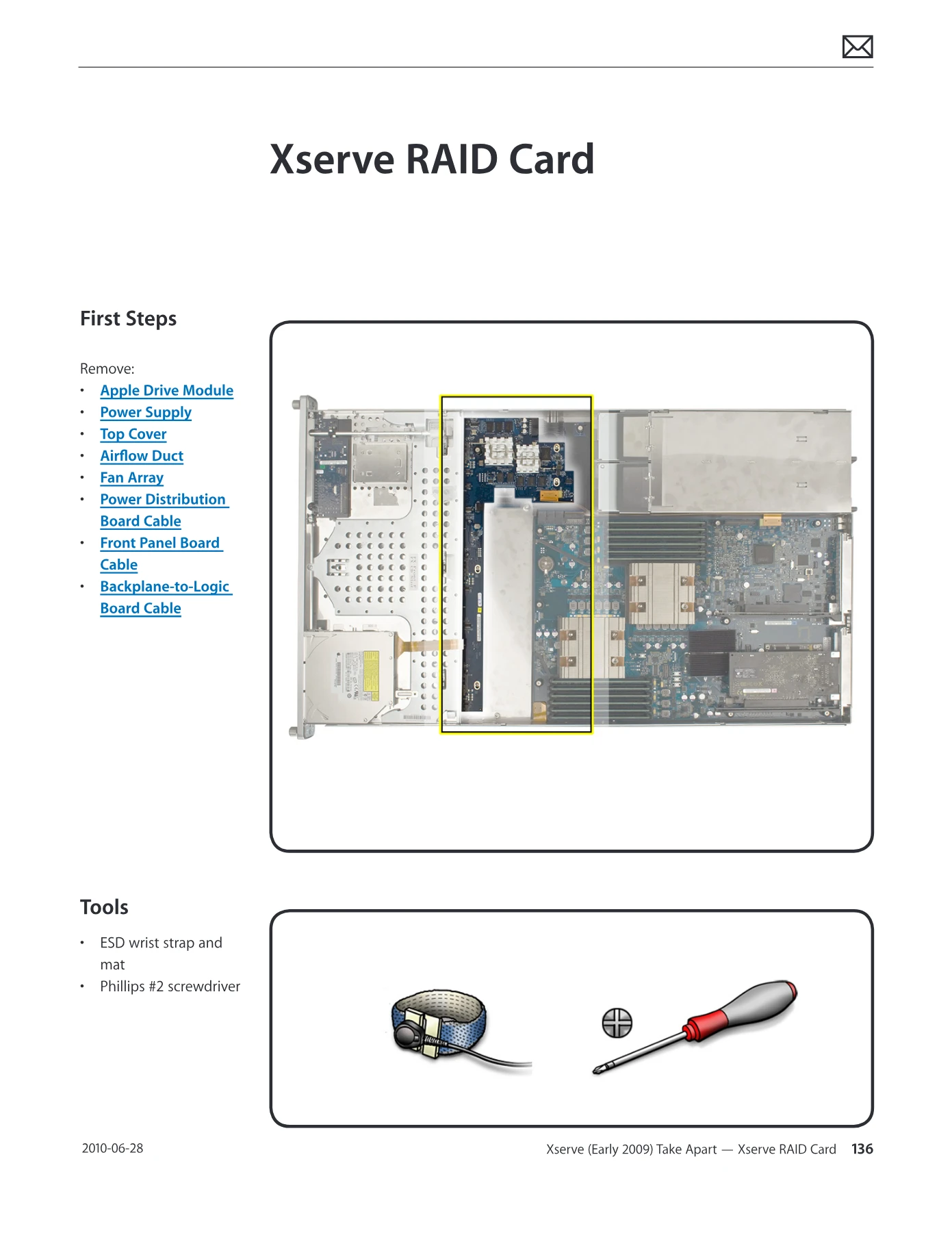
- RAID 0, 1 and 5 with 512 MB cache and a 72-hour backup battery. The card did not occupy a PCI Express expansion slot. ↗
- Colors / finishes
- Silver
Models
1 record
- Model numbers
- A1279
- Identifiers
- Xserve3,1
| Model | Model number | Identifier |
|---|---|---|
| Xserve (Early 2009) ↗ | A1279 | Xserve3,1 · Mac-F223BEC8 |
Sources
6 sources
- AppleDB — Xserve (Early 2009)Reference
- Wikipedia contributors — List of Mac modelsReference
- Xserve (2009) - Technical SpecificationsOriginal source
- Reviewed exact-model original photograph and provenanceOriginal source
- Xserve (Early 2009) — Apple Technician GuideOriginal source
- Apple updates Xserve with twice the performanceOriginal source
Catalog data: MIT (AppleDB); CC BY-SA 4.0 (Wikipedia contributors)