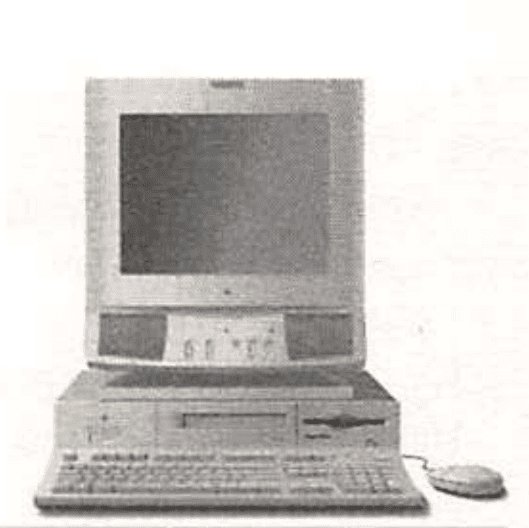
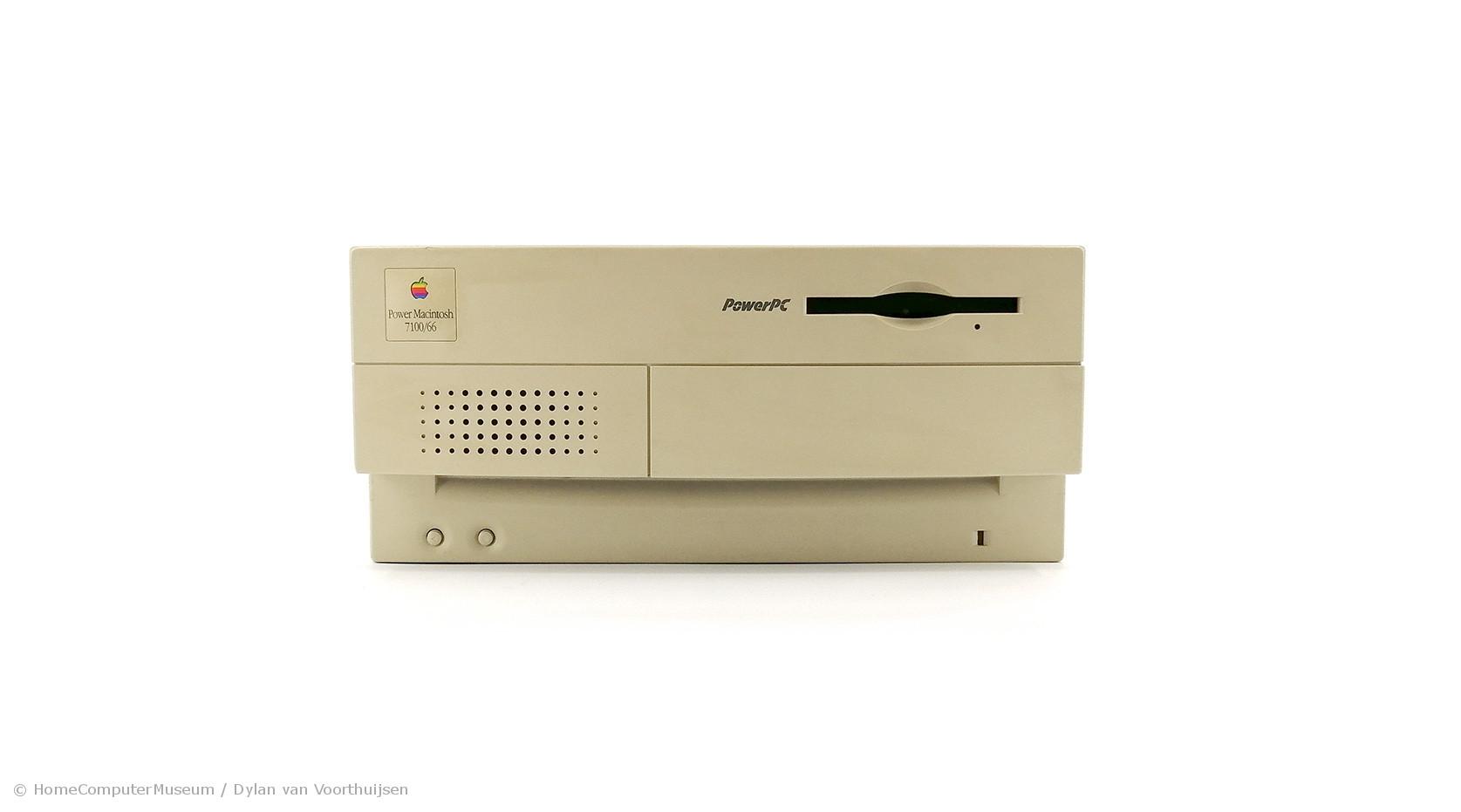
Power Macintosh 8200/100
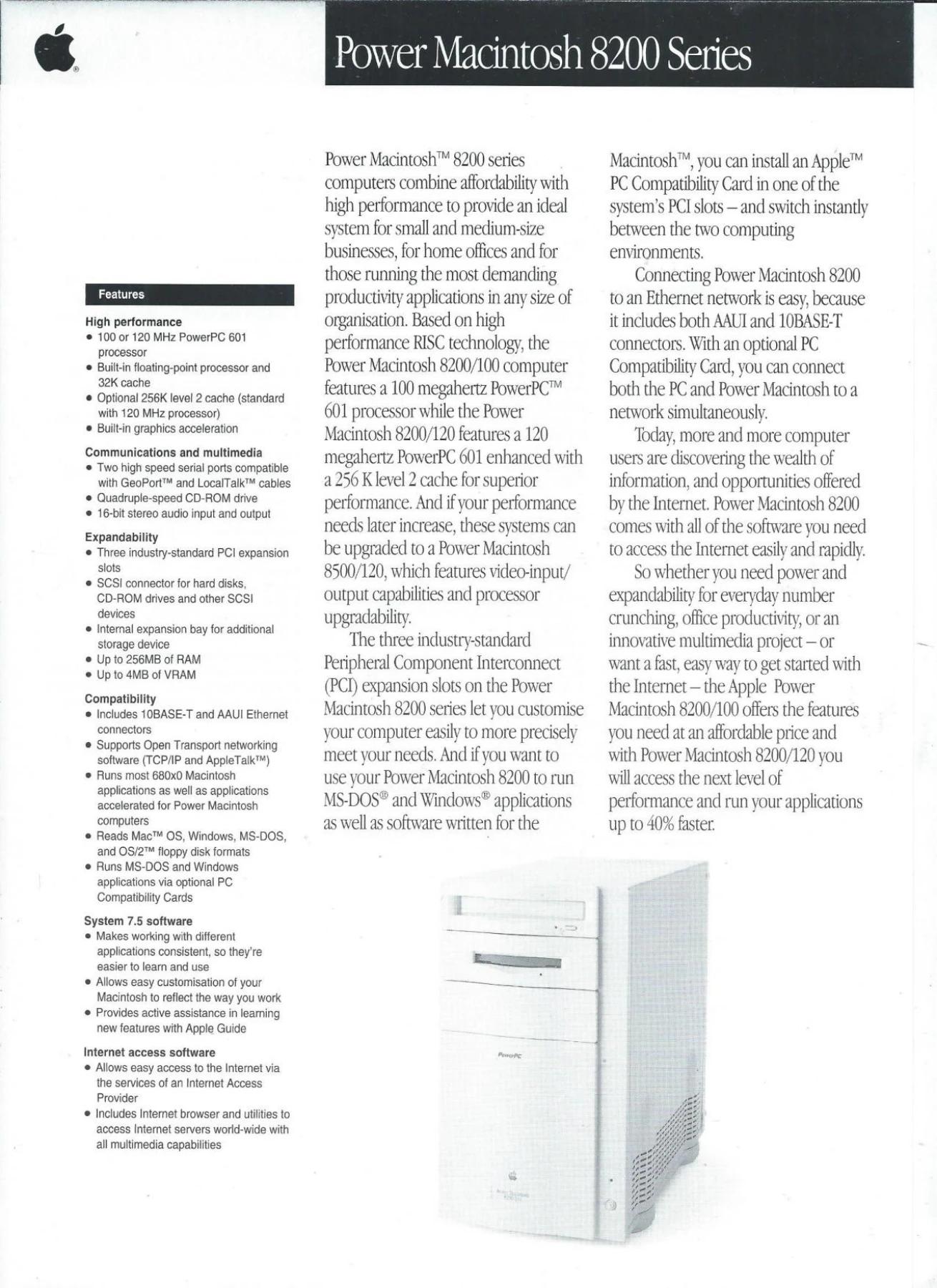
The Power Macintosh 8200/100 placed a PowerPC 601-based PCI platform in a tower enclosure. It was a regional model rather than a universal replacement for the 7200, and Apple’s reference record explicitly notes its non-U.S. distribution.
- First available
- April 1996
Apple's historical inventory explicitly calls these approximate introduction/discontinuation dates; month precision is preserved.
Image: Apple Computer, Inc. — original product photograph; scan preserved by 1000bit · Copyright Apple Computer, Inc.; no open reuse license asserted ↗
History
Apple’s model record lists PowerPC 601 at 100 MHz, a published memory range of 8 MB - 256 MB, and 1.2GB of internal SCSI storage. The original software entry is 7.5.3. Apple lists a 4x CD-ROM configuration.
The machine combined PCI expansion and DIMM memory with the established tower format. Its processor and internal configuration distinguish it from the visually related 8500 range.
Media 2
View all ↗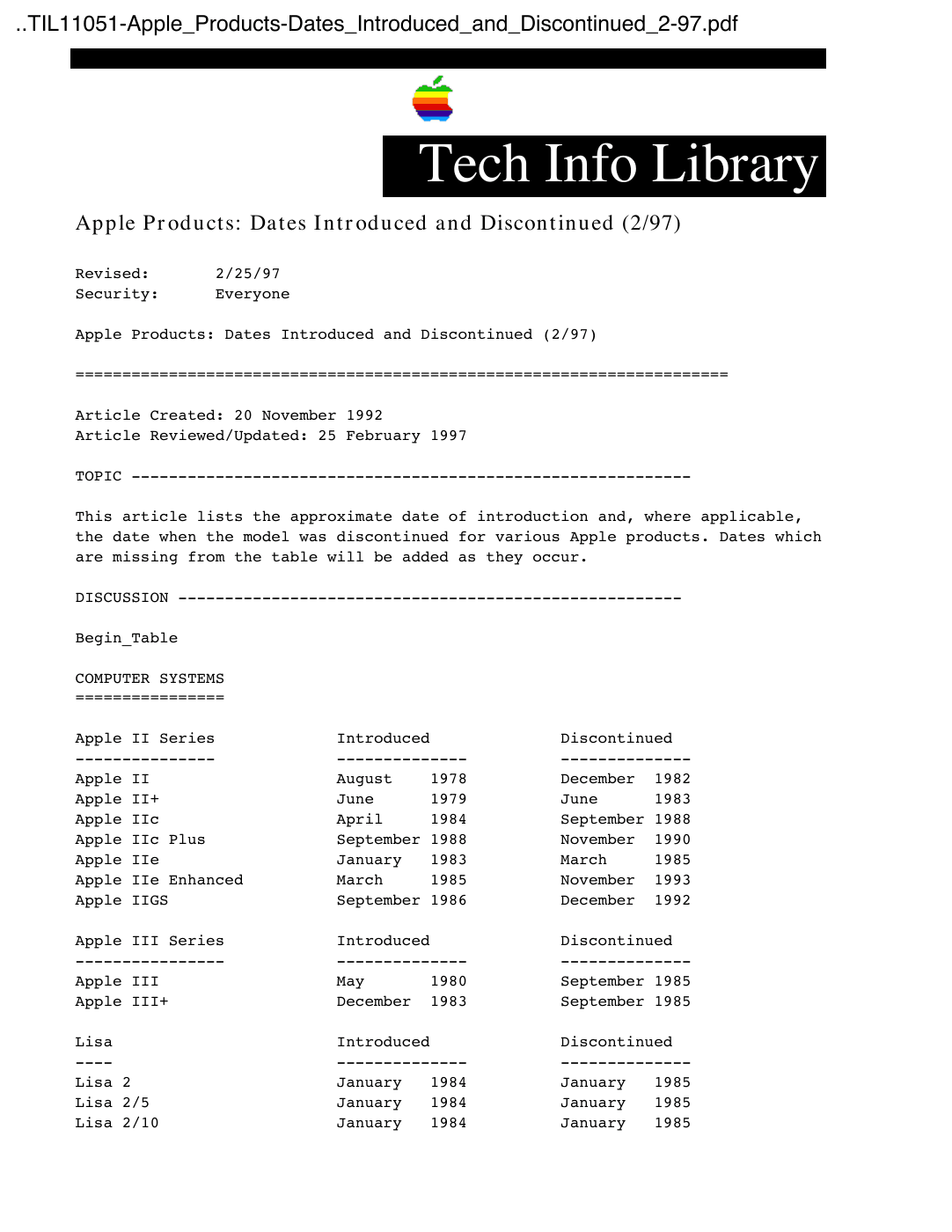
2 of 2 records
Details
Specifications
19 fields
- Processor
- PowerPC 601 at 100 MHz
- Memory (Apple published range)
- 8 MB - 256 MB
- Memory expansion
- 4, 168-pin DIMM
- Secondary processor
- opt. PC Compatbility Card
- Expansion
- 3 PCI
- Internal storage
- 1.2GB
- Storage interface
- SCSI
- CD-ROM
- 4x
- Floppy disk
- 1.44MB
- Original system software
- 7.5.3
- Ethernet
- AAUI, 10baseT
- Display connection
- DB-15
- SCSI
- DB-25
- Weight
- 25 lb
- Dimensions
- 14 H x 7.7 W x 15.75 D in
- ADB connector
- One Apple Desktop Bus (ADB) port ↗
- Serial connectors
- Two DMA RS-232/RS-422 ports; LocalTalk and GeoPort compatible ↗
- Audio connectors
- Stereo input and output minijacks; 16-bit audio at up to 44.1 kHz ↗
- Video memory
- 1 MB VRAM, expandable to 4 MB ↗
Sources
4 sources
- Apple Products: Dates Introduced and Discontinued (2/97) — p. 3Original source
- Power Macintosh 8200/100: Technical SpecificationsOriginal source
- Apple Facts — period product catalogOriginal source
- Power Macintosh 8200 SeriesOriginal source
Model-specific hardware checked against Apple’s named specification record and period product documentation. Generic family names can include later configurations; the numerical figures describe the cited Apple reference configuration.
Catalog data: Apple published product facts