← ArchiveiMac · 1999
iMac (Slot Loading, 400 MHz)
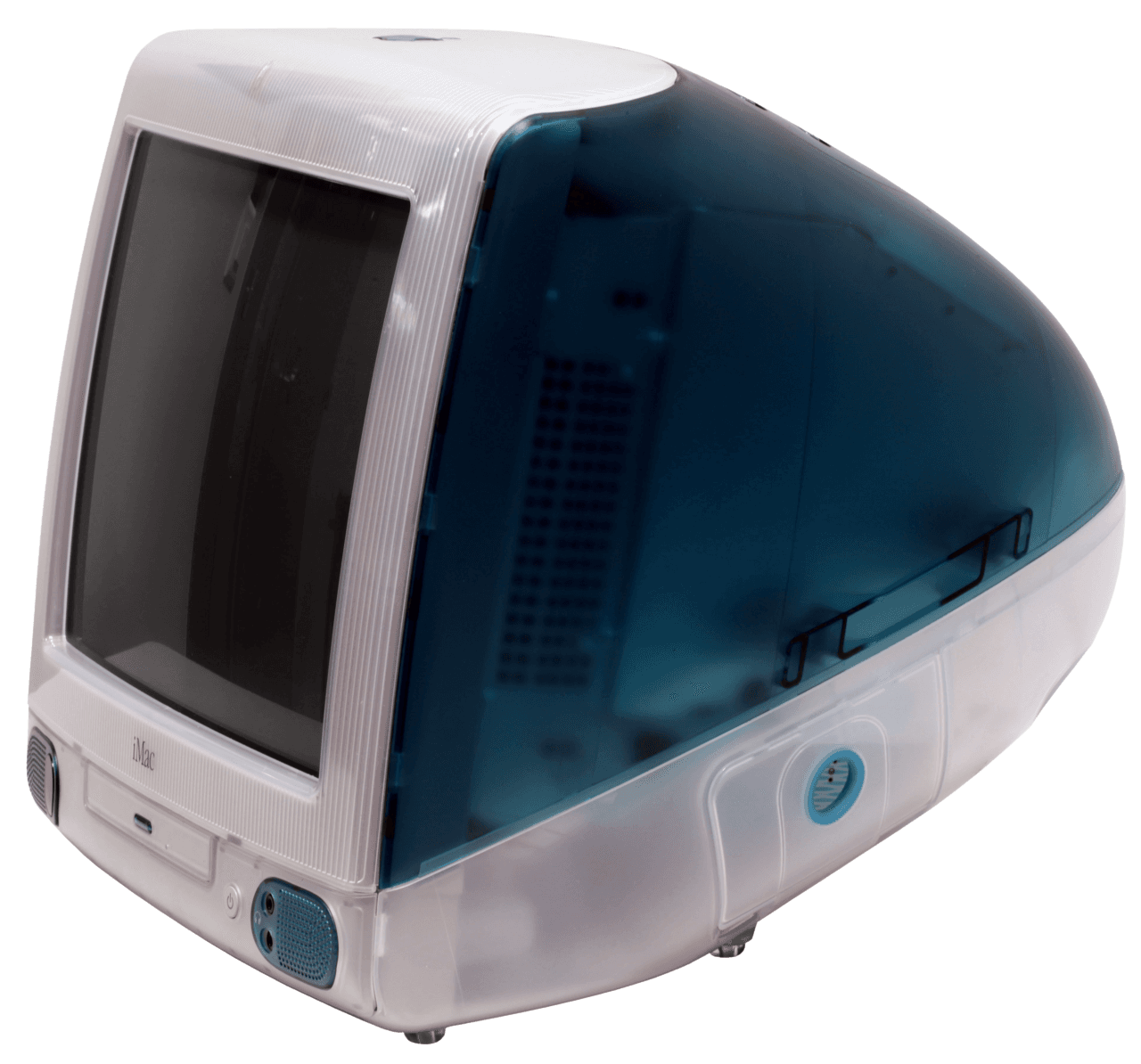
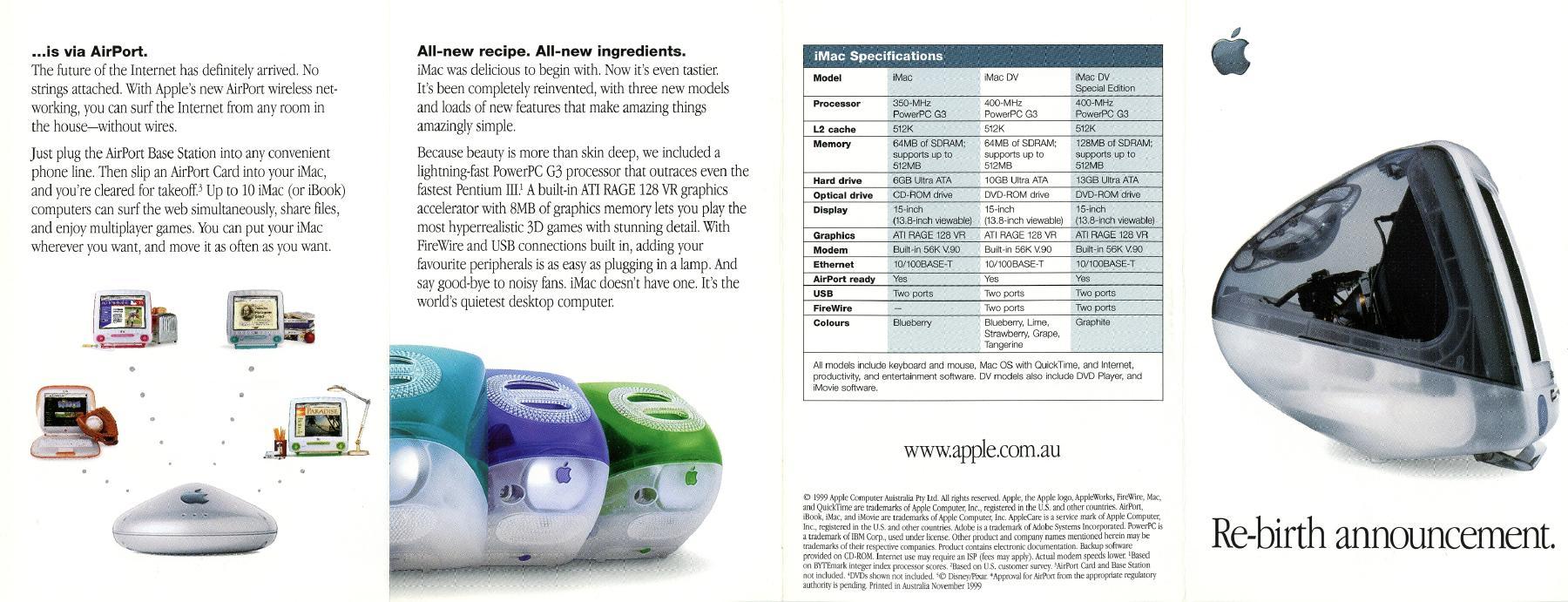
The late-1999 iMac redesign replaced the tray-loading optical mechanism with a slot-loading drive and moved to a smaller, fanless enclosure. Apple’s Australian brochure distinguishes the 350 MHz iMac from the 400 MHz DV and DV Special Edition configurations.
- First available
- October 5, 1999
- Discontinued
- March 18, 2003
Image: Apple Computer, Inc. — via apple-history.com · Rights reserved; no open reuse license asserted ↗
History
The 400 MHz DV models combined FireWire, iMovie, and DVD-ROM drives for home video work. The Special Edition added more memory and a larger disk, so one 400 MHz processor speed did not imply a single fixed memory and storage configuration.
Media 3
View all ↗
3 of 3 records
Details
Specifications
23 fields
- Processor
- 400 MHz PowerPC G3 ↗
- Display
- 15-inch CRT; 13.8-inch viewable ↗
- Graphics
- ATI RAGE 128 VR; 8 MB graphics memory ↗
- Standard memory
- 64 MB; 128 MB on DV Special Edition ↗
- Standard storage
- 10 GB; 13 GB on DV Special Edition ↗
- Optical drive
- Slot-loading DVD-ROM ↗
- FireWire
- Two ports on DV and Special Edition ↗
- Networking
- 10/100BASE-T Ethernet; 56K modem; optional AirPort ↗
- Architecture
- PowerPC
- 1999 USB connector and root-hub arrangement
- Two USB Type A ports connected to separate root hubs; both can support 12 Mbit/s devices simultaneously ↗
- 1999 USB port power
- 5 V; up to 500 mA on each port ↗
- 1999 bundled USB software
- Macintosh USB system software 1.3 supports control, bulk, interrupt and isochronous transfers ↗
- 1999 USB startup support
- The documented system can boot a USB Mass Storage Class device and includes USB Mass Storage Support 2.0; this describes the original note’s software scope ↗
- 1999 USB sleep and wake behavior
- USB ports can power down in Sleep; the root hub supports wake on attachment, removal or device resume, including keyboard press and mouse motion ↗
- 1999 audio sampling
- 16-bit stereo input/output with sample sizes up to 16 bits at 44.1 kHz ↗
- Front headphone connections
- Two stereo headphone jacks beside the left front speaker ↗
- External sound-input connection
- 3.5 mm mini phone jack; accepts line-level stereo signals or an Apple PlainTalk microphone ↗
- Built-in speaker muting
- Inserting headphones into either headphone jack, or a plug into the sound-output jack, turns off the internal speakers ↗
- Ethernet link sensing
- Automatically detects a 10BASE-T or 100BASE-TX hub; uses an RJ-45 connector described on the following page ↗
- Documented modem and fax protocols
- RJ-11 telephone port; data up to 56 kbit/s using V.90 or K56flex, and Group 3 fax up to 14.4 kbit/s ↗
- DV FireWire connector and data rates
- Two six-contact IEEE 1394 ports supporting 100, 200 and 400 Mbit/s; the 350 MHz base model does not inherit them ↗
- DV FireWire power budget
- Up to 6 W total shared by both connectors when the computer is on; maximum current is 0.5 A, not a 6 W-per-port claim ↗
- DV external display behavior
- Three-row 15-pin VGA-style connector; hardware mirroring of the internal display using the internal display’s available modes ↗
Models
1 record
- Model numbers
- M5521
- Identifiers
- PowerMac2,1
| Model | Model number | Identifier |
|---|---|---|
| iMac (Slot Loading) ↗ | M5521 | PowerMac2,1 |
Sources
5 sources
- AppleDB — iMac (Slot Loading)Reference
- Wikipedia contributors — List of Mac modelsReference
- iMac (Slot Loading) - Technical SpecificationsOriginal source
- Original Apple Australian product fold-out brochure, 1999Original source
- The iMac Family of Computers — Apple Developer Note, 1999Original source
Catalog data: MIT (AppleDB); CC BY-SA 4.0 (Wikipedia contributors)