eWorld
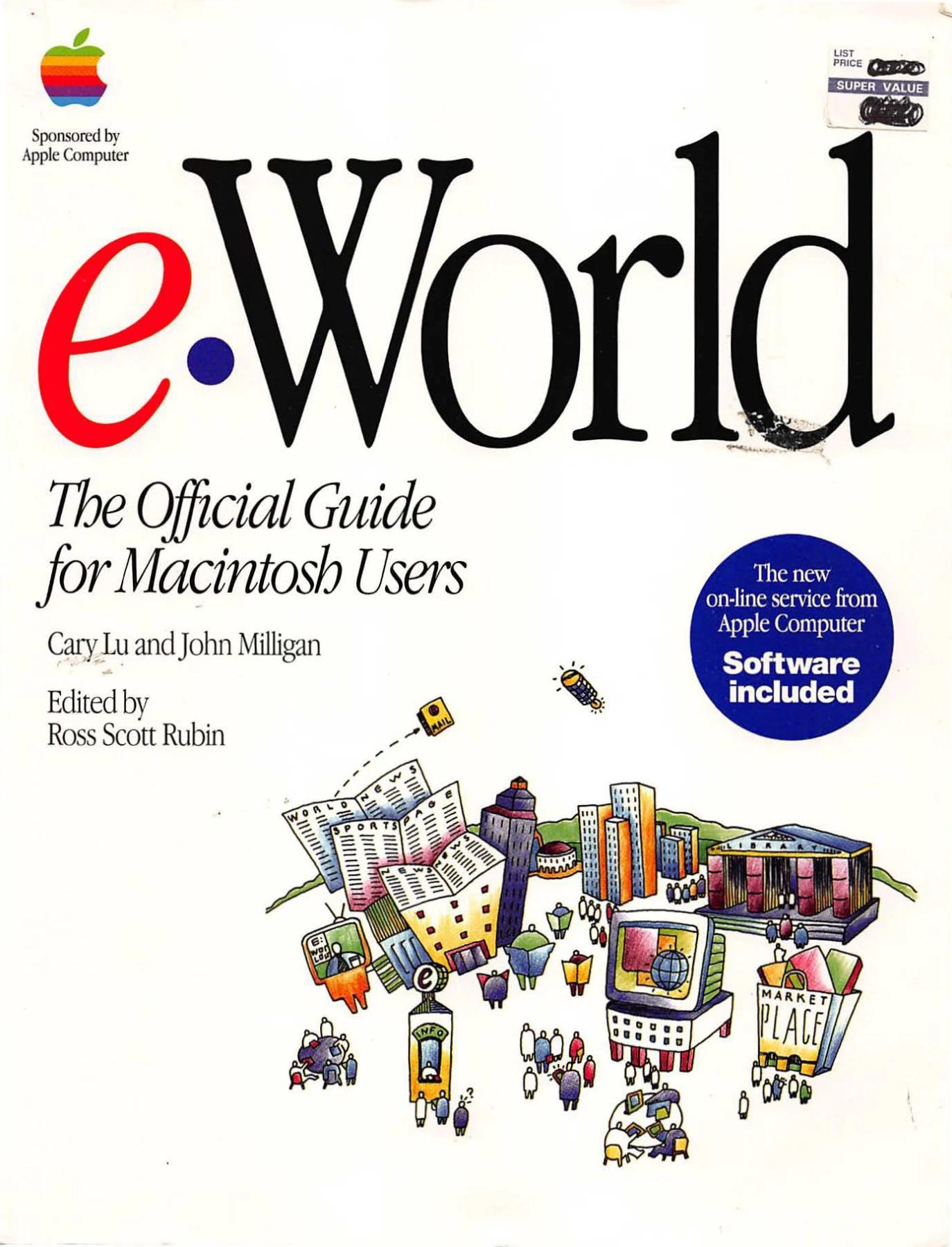
eWorld was Apple’s branded online information and communications service, organized as a graphical community of buildings and public spaces.
- First available
- June 20, 1994
1994 is the service’s introduction year. TidBITS’s contemporaneous June 20 report, citing MacWEEK, says eWorld opened to users that day. Apple’s August newsletter describes a separate online introduction event; its relative-month wording is not substituted for the public-opening date. Exact original announcement day remains unverified in the retained primary sources.
Image: Apple Computer, Inc.; scan preserved by Mac Mothership · Original Apple publication, software interface, design and credited third-party content rights reserved; no open reuse license is asserted. ↗
History
eWorld opened to the public on June 20, 1994, according to TidBITS’s report published that day. Apple’s August developer newsletter describes the service and an online press event, while its earlier March report discussed the announcement and planned availability. These are different stages of the service’s introduction.
Apple’s 1994 product catalog describes eWorld as its online information service for Macintosh and PowerBook users. The town-square interface grouped email, news, research, discussion and subscription information providers into recognizable destinations.
The service supported Internet and other email gateways, public discussions and publisher-created areas. Its advertised future Windows and Newton versions were plans in that source; they are not treated here as shipped platforms.
Media 13
View all ↗
6 of 13 records
Details
Specifications
4 fields
Sources
4 sources
- Apple Facts — Apple Facts 9410 10.94 October 1994Original source
- Directions 1994 09 — original Apple publicationOriginal source
- Apple Directions — August 1994, eWorld online introduction eventOriginal source
- TidBITS no.231 — contemporaneous June 20, 1994 opening reportReference
Complete hosted service and its access environment; no additional records for each town-square destination.
Catalog data: Original editorial text; factual identity and specifications attributed to the cited publications