AppleColor 100
AppleColor Monitor 100 was an early color display for the Apple II and Apple III generation, with an RGB input system supporting eight-color TTL and sixteen-color semi-analog modes. It belongs to a different display system from the later composite ColorMonitor IIe and IIc and from the analog RGB monitor designed for Apple IIGS.
- First available
- December 1984
Inventory date, not independently verified announcement or shipping date; first-of-month dates may be approximate.
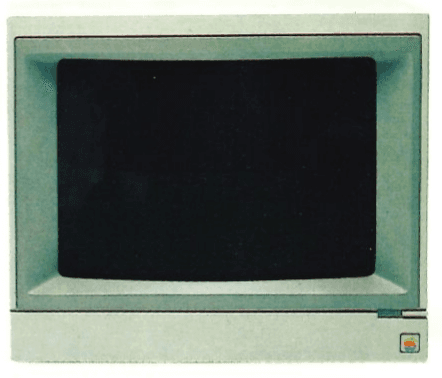
Image: Apple Computer, Inc. · Rights reserved · original Apple product photograph; no open reuse license asserted ↗
History
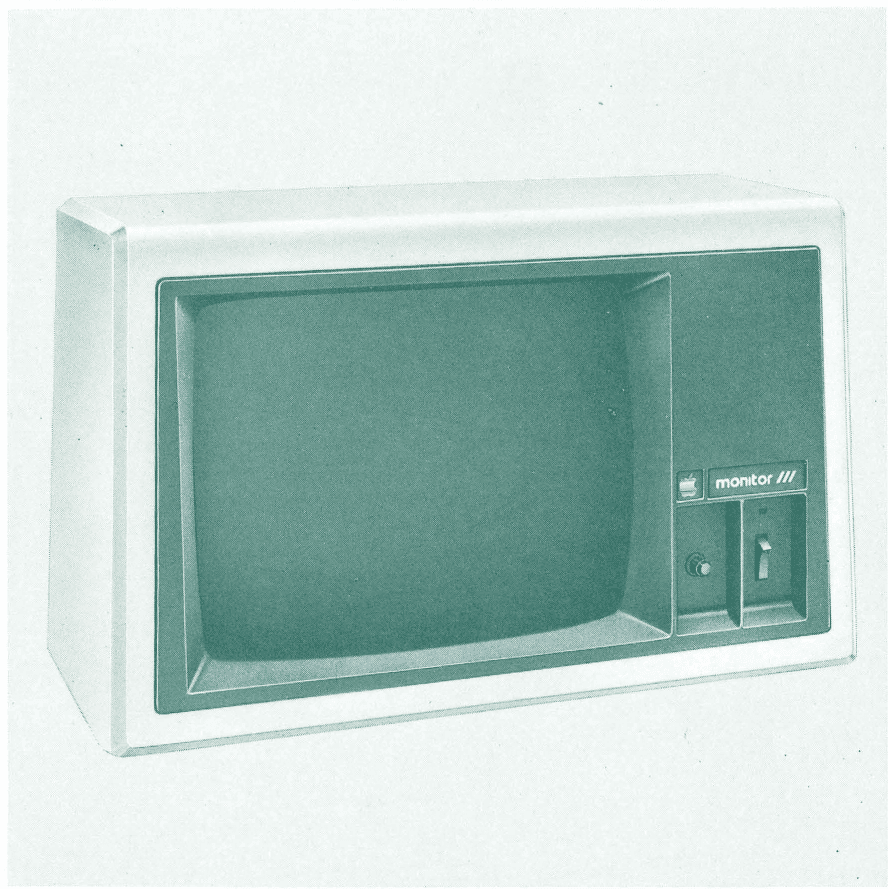
Apple's original user manual documents how the monitor is connected and adjusted, and makes the required video interface part of the product's history. Its cover photograph shows the actual Monitor 100 enclosure and control column, while the complete scanned manual preserves the setup instructions.
Media 1
View all ↗1 of 1 records
Details
Specifications
13 fields
- Picture tube
- 12-inch diagonal viewable CRT; P22 phosphor; 0.38mm maximum dot pitch ↗
- Active display area
- 21.6 × 16cm ↗
- Video input
- 16-color semi-analog input or 8-color TTL RGB input; negative-going TTL composite sync ↗
- Video bandwidth
- 25MHz ↗
- Power
- 70W under normal viewing conditions; 115V AC model at 50/60Hz ↗
- Analog resolution
- 600 TV lines at the center; 416 TV lines at the corners ↗
- Text display
- 80 characters per row; at least 24 rows ↗
- Front controls
- On/off, Green Only, contrast, brightness and tilt adjustment ↗
- Rear controls
- Vertical Hold and Vertical Size ↗
- Horizontal deflection range
- 15,200–16,300 Hz free running ↗
- Vertical deflection range
- 47–63 Hz ↗
- Weight
- Approximately 11.5 kg (25.3 lb) ↗
- Operating temperature
- 5–30°C ↗
Sources
3 sources
- Wikipedia contributors — List of Apple productsReference
- AppleColor Monitor 100 — User’s ManualOriginal source
- Apple original product photography and model evidenceOriginal source
Exact Apple-origin product photograph verified; source publication and image derivation recorded in the reviewed artwork packet.
Catalog data: CC BY-SA 4.0 (Wikipedia contributors)