NTSC and PAL versions
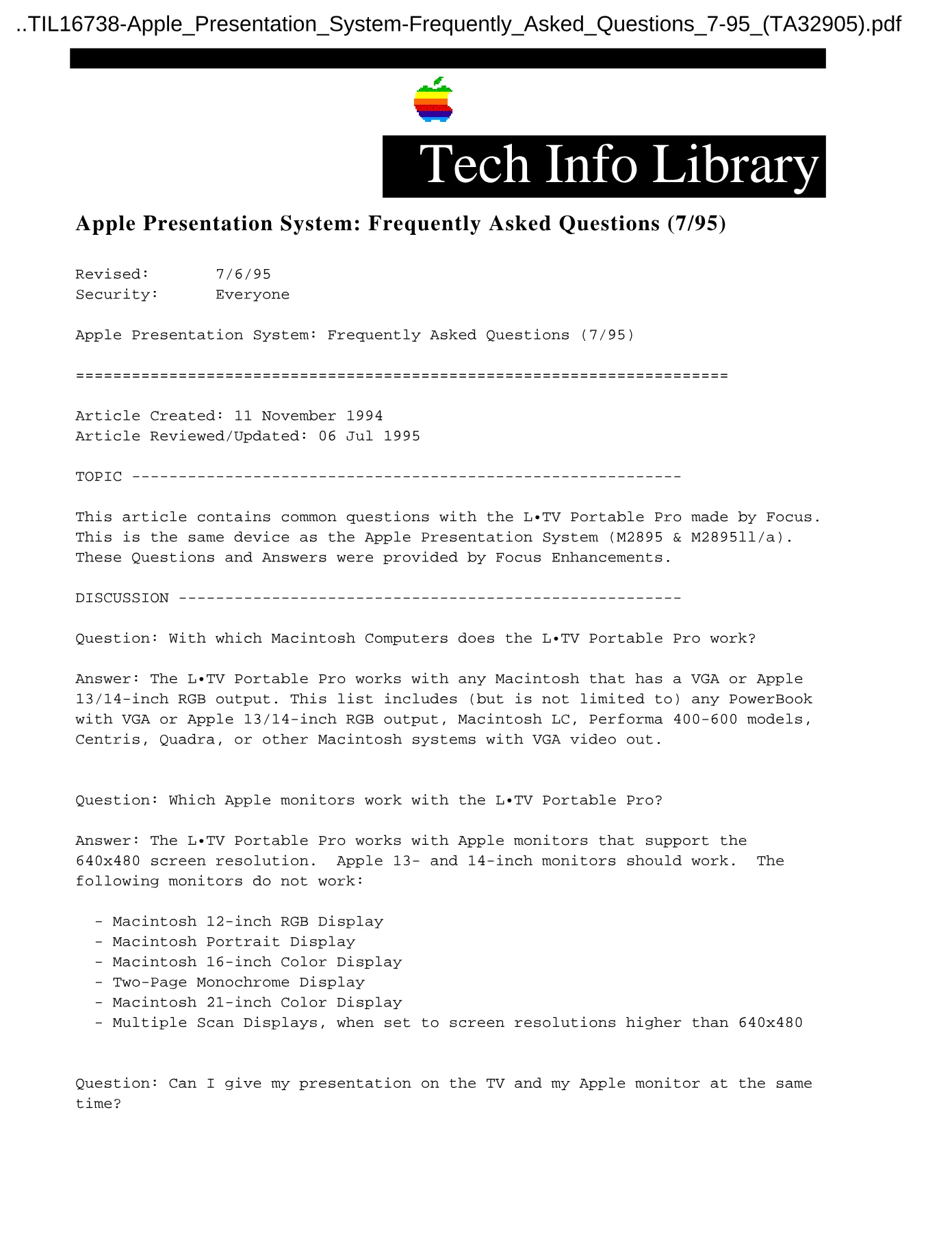
The Focus-provided Apple FAQ explicitly describes two country-dependent video-standard versions, grouped as regional variants.
Source ↗Apple’s external Macintosh-to-TV scan-converter kit used the Focus L•TV Portable Pro with cables and Screen Squeeze software for presentations and videotape recording.
The kit is a separately priced option in September 1994 Apple Directions and has an October 1994-created technical article. These establish documented offering, not an exact introduction date; launch fields remain unknown.
Image: Recycled Goods; original product photography · Original seller photograph; rights reserved. No open reuse license asserted. ↗
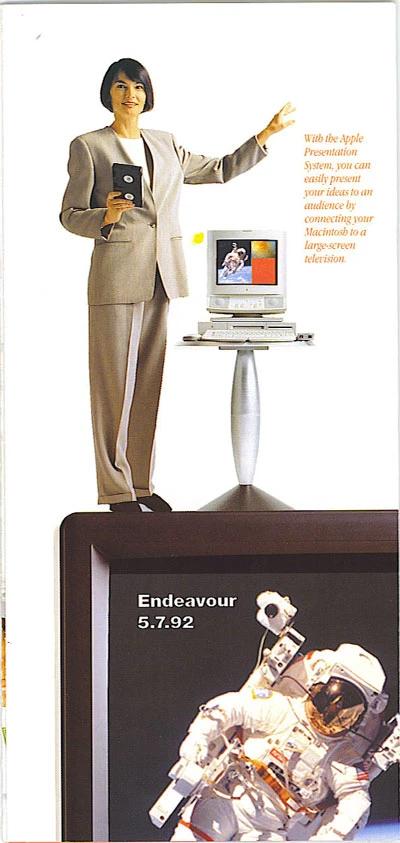
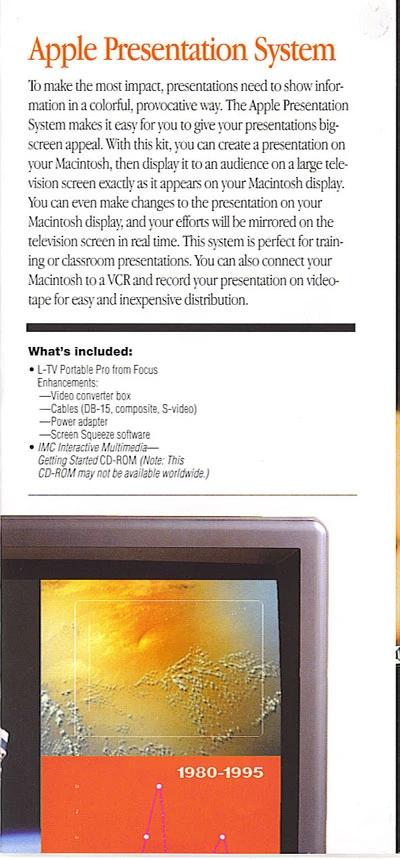
Apple marketed the Presentation System as the video-output companion to its internal Video and TV/Video input kits, listing a $299 U.S. option in September 1994. It connected a Macintosh’s DB-15 display output to a television or VCR, allowing a presentation to be mirrored on a larger screen or recorded to videotape.
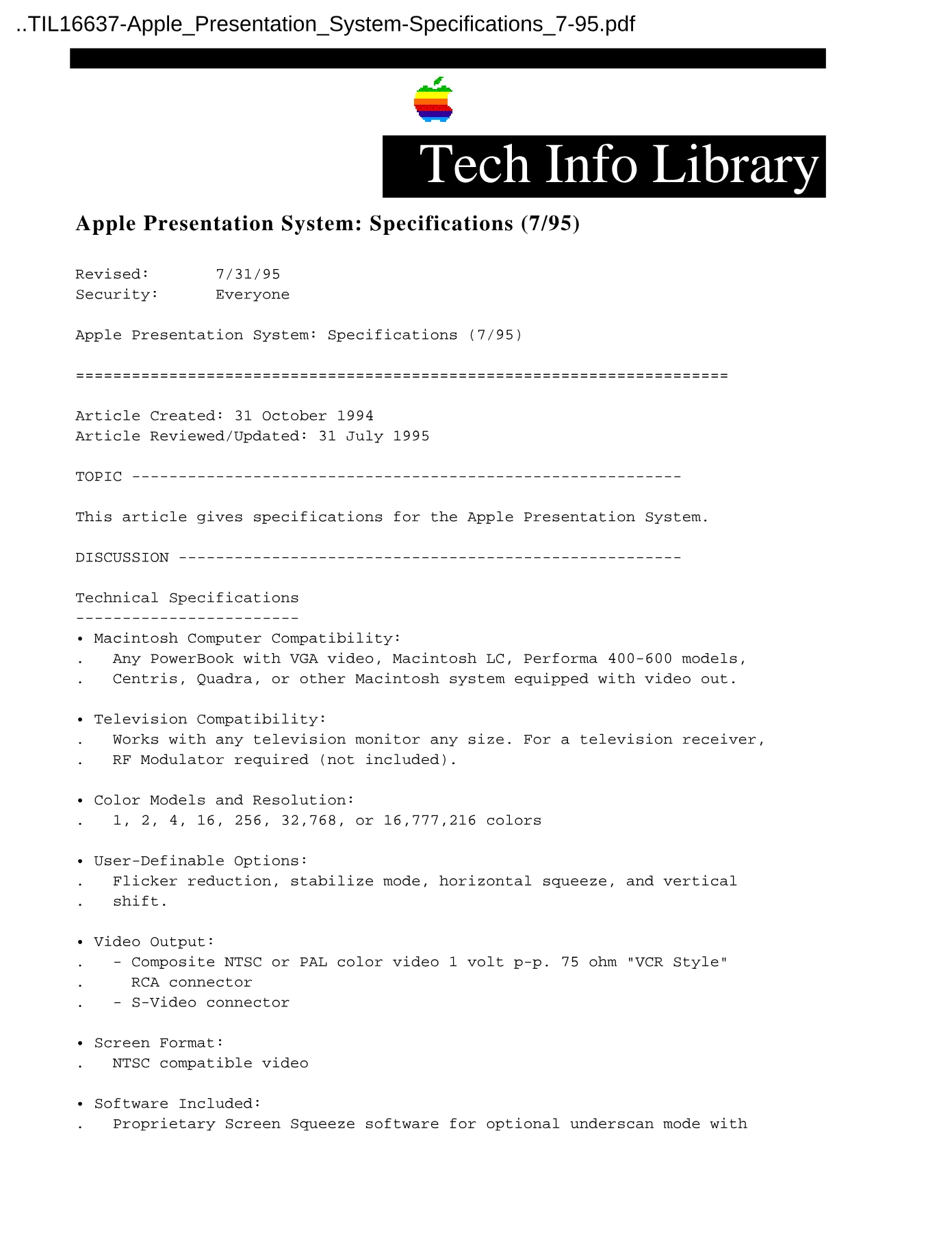
Apple’s own specification and FAQ identify the supplied converter as Focus Enhancements’ L•TV Portable Pro, so the Focus-branded device is an intentional part of this Apple-marketed kit. The package included the converter, display/S-video/composite cables, power supply, adjustment tool and Screen Squeeze software. Focus provided hardware support, while a bundled Interactive Multimedia disc had separate support.
The supported desktop mode was 640 by 480 with Apple 13/14-inch RGB or VGA-compatible output. Composite and S-video outputs served NTSC or PAL regional versions; the Focus-provided Apple FAQ describes separate NTSC and PAL converters. Screen Squeeze provided underscan so the entire desktop could fit inside a television’s visible area. Macintosh models without an appropriate video output remained outside the documented compatibility.
Brochure

Magazine

Document
Brochure
Document
Document
6 of 8 records
The Focus-provided Apple FAQ explicitly describes two country-dependent video-standard versions, grouped as regional variants.
Source ↗